
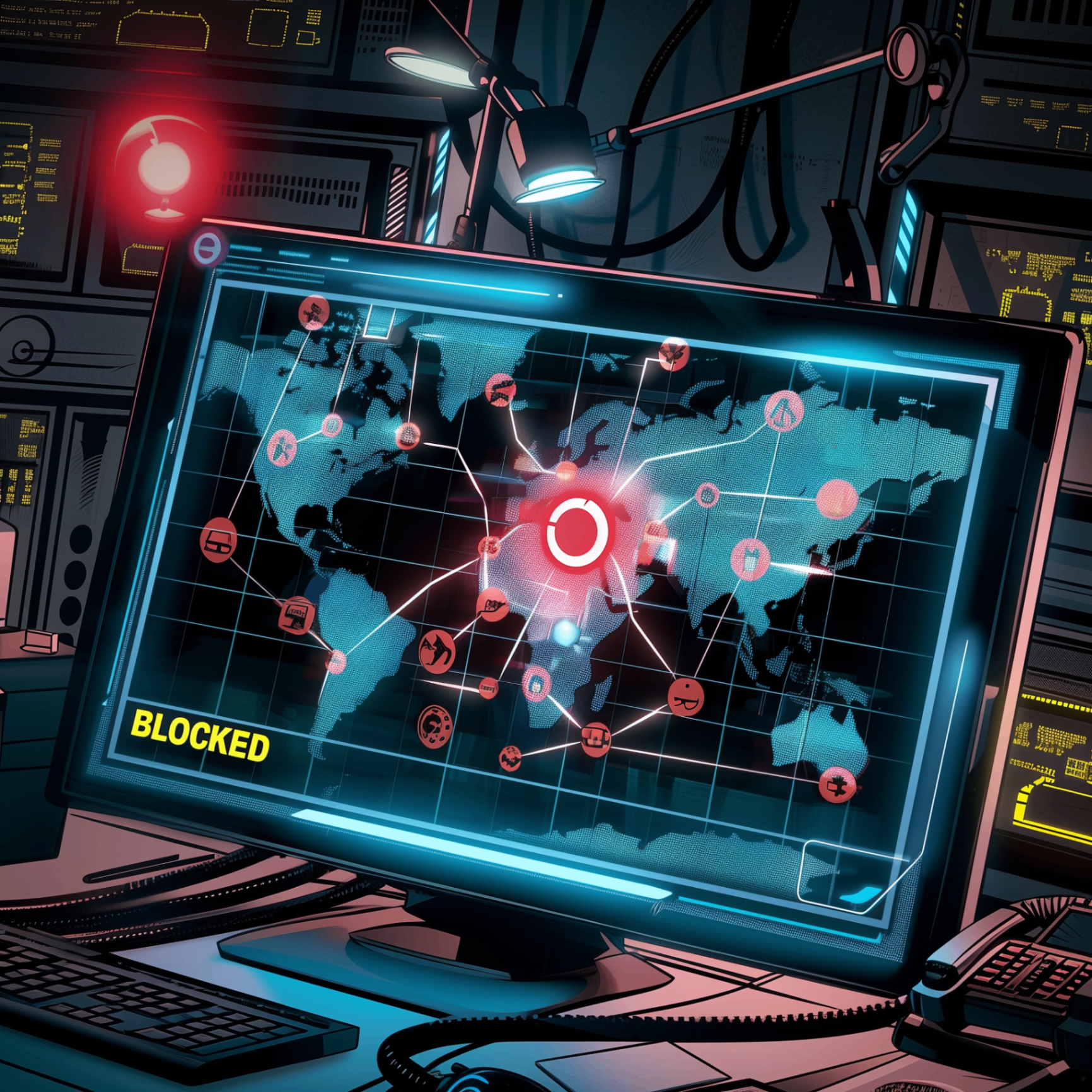
The takedown that buys a weekend
A coordinated operation dismantled a major illegal IPTV network in a single night, just before a global sporting event. It was a real achievement, and it also shows why takedowns alone never quite stop live sports piracy.
Shutting down an illegal IPTV network removes the distribution layer that viewers connect to, but it does not remove the source the content was captured from, which is why a single takedown rarely stops the underlying piracy for long. That pattern was on display when Italian authorities moved against a global IPTV network ahead of a major winter sporting event, an operation reported in detail by TorrentFreak.
Operations like this are difficult and genuinely valuable, and nobody who understands the field would dismiss them. They involve cross-border cooperation, financial investigation, server seizures and, in many cases, arrests. It is worth being precise, though, about what a takedown changes and what it does not, because the timing of this particular operation tells you a great deal about both.
Why are IPTV takedowns timed to big events?
The operation landed just before a marquee event, and that was not a coincidence so much as the entire logic of live-sports enforcement. Demand for pirated streams spikes around specific fixtures, so enforcement is scheduled to blunt that spike when it is most visible and most damaging. This makes it fundamentally reactive, in the sense that it responds to a predictable surge, dismantles the infrastructure that is visible at that moment, and buys a period of relative quiet through the event window.
The difficulty is what happens once that window closes. The infrastructure that gets seized, including servers, reseller panels and subscriber management systems, is replaceable and comparatively cheap to rebuild. What the takedown does not reach is the question of where the content actually came from, meaning which legitimate feed was captured, re-encoded and fed into the network in the first place. When the distribution layer is removed but the source is left intact, the same source simply supplies a new network. See our note on live event protection for how origin-side controls change that equation.
A takedown removes the pipe, but it does not remove the source the pipe was drawing from, and rebuilding a pipe is cheap.
Why does enforcement struggle to keep up with piracy?
Underneath all of this is an asymmetry problem. Standing up an IPTV operation is inexpensive and fast, whereas dismantling one requires warrants, coordination across jurisdictions and months of investigative work. When the defender has to spend heavily to remove infrastructure that the attacker can reconstitute for a small fraction of that cost, the defender is on the wrong side of the arithmetic, regardless of how many individual operations succeed and make the news.
Enforcement also scales badly, because each network is essentially its own separate case, built and prosecuted from the ground up. Piracy, by contrast, scales the way software scales, which is to say almost without friction. That mismatch is the reason takedowns can be genuinely impressive and still leave the underlying problem more or less where it was, year after year.
What actually stops the leak at its source?
The missing element is attribution at the source. If every authorised copy of a feed carries an invisible forensic identifier that survives re-encoding and capture, covering each distributor, each regional partner and each screener, then a leaked stream stops being anonymous. It points back to the exact copy it originated from, which turns enforcement from an endless exercise in removing outlets into a far more targeted matter of removing the specific leak and the incentive behind it.
None of this argues that takedowns should stop, because some operations simply have to be shut down and there is no substitute for that. The argument is that a strategy built only on takedowns is one that schedules itself around the opponent's calendar and accepts the opponent's economics. Attribution changes who sets the terms of the contest, and that is the part of the problem this impressive but partial victory leaves unresolved.
Frequently asked questions
Does shutting down an IPTV network stop piracy?
Not for long on its own. A takedown removes the distribution infrastructure, but the servers and reseller panels are cheap to rebuild, and the original source that the content was captured from is usually left intact, so the same source can supply a new network within days.
Why are illegal IPTV takedowns timed to major sporting events?
Demand for pirated streams peaks around specific fixtures, so enforcement is scheduled to reduce that peak when it is most damaging. This makes it reactive by design: it responds to a predictable surge rather than preventing the leak in advance.
Why can enforcement not keep up with piracy?
There is a cost asymmetry. Setting up an IPTV operation is fast and cheap, while dismantling one takes warrants, cross-border coordination and months of work. Enforcement scales case by case, whereas piracy scales like software, almost without friction.
What is forensic watermarking and how does it help?
Forensic watermarking embeds an invisible, attack-resistant identifier in each authorised copy of a stream. When a copy leaks, the identifier survives re-encoding and capture and points back to the exact recipient it came from, allowing rights holders to address the source of a leak rather than only its distribution.
Sources
- [1] TorrentFreak. “Piracy crackdown in Italy shuts down IPTV services ahead of Winter Olympics.”
- [2] TorrentFreak. “Anti-Piracy news and enforcement coverage.”
Forensic watermarking that attributes leaks at the source.
Vestigit embeds invisible, session-level identifiers in live and on-demand video that survive re-encoding and capture. When a stream leaks, the identifier points back to the exact authorised copy it came from — enforcement stops chasing outlets and starts removing sources.
Request a demoContinue reading
The Odyssey leak was not an X problem
A full, high-quality copy of Christopher Nolan’s The Odyssey reached 2.1 million views on X in roughly two and a half hours. Universal removed it. The harder question remained open: which authorised copy escaped first?
ReadItaly's two-speed war on piracy
Audiovisual piracy in Italy caused about 2.3 billion euro in economic losses in 2025, even though the number of people pirating content fell for the second year running. The gap between those two facts is the part that should interest anyone who owns premium video rights.
ReadHow Greece taxed its way into more piracy
Audiovisual piracy costs Greece more than 400 million euro of GDP a year, and a ten percent tax on legal streaming platforms appears to be feeding the problem. The Greek case is a warning about second-order effects.
Read